What's the difference between an electric stacker and an electric forklift?
Electric stackers
and electric forklifts, as two mainstays, both lift and move cargo, but
they differ fundamentally in design, functionality, and application
scenarios.
Content
- 1 Design and Maneuverability
- 2 Core Functionality: Load Capacity and Lift Height
- 3 Choosing the Right Equipment
Design and Maneuverability
Electric stackers
are generally lighter and more compact. They are primarily operated by
walk-behind or stand-on models, with the operator either walking behind
the machine or standing on a platform.
This design gives
electric stackers excellent maneuverability and a tight turning radius,
making them ideal for short-distance material handling and stacking in
narrow aisles, crowded production halls, or smaller warehouses. The load
is typically shared between the front outriggers and wheels, making
them structurally incapable of "floating" operations like forklifts.
In
contrast, electric forklifts (particularly counterbalanced forklifts)
are heavier vehicles. They feature a sit-down design, with the operator
seated in the cab for a wide field of view and stable control. Forklifts
rely primarily on a rear counterweight for load balance, enabling them
to easily handle heavier and bulkier loads and handle a variety of
demanding loading, unloading, and transport tasks. They are ideal for
large logistics centers, factories, and applications requiring
long-distance transport.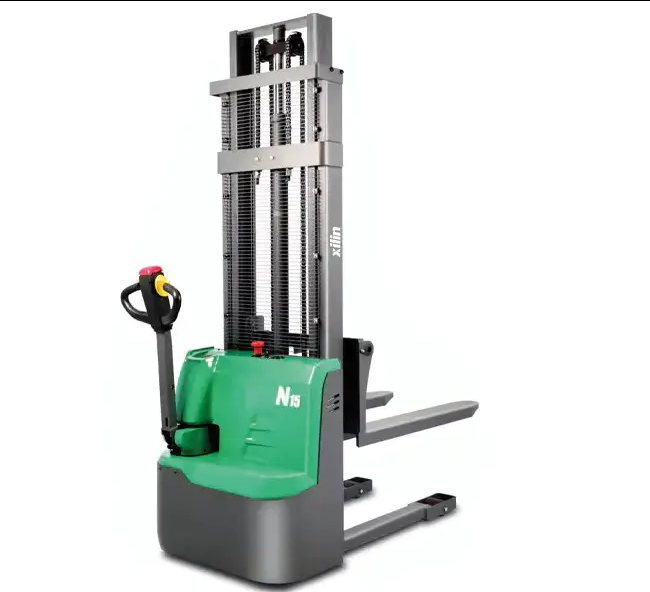
Core Functionality: Load Capacity and Lift Height
In terms of functionality, the biggest difference between the two lies in their emphasis on load capacity and lift height.
Electric
forklifts have a moderate load capacity and are primarily used for
stacking and retrieving light to medium-sized loads. While models like
high-bay stackers can also achieve comparable lift heights, their core
strength lies in their vertical stacking efficiency in narrow aisles.
Electric
forklifts, on the other hand, excel in load capacity and can easily
handle materials weighing several tons. Furthermore, their versatile
mast designs and powerful hydraulic systems give them unparalleled
advantages for accessing and retrieving high-bay racks and efficiently
loading and unloading trucks. Forklifts are better suited for
continuous, high-frequency material turnover.
Choosing the Right Equipment
The choice of equipment ultimately depends on your warehouse or factory environment:
- If
you have narrow aisles and limited warehouse space, and your primary
task is high-level stacking and short-distance handling, then a flexible
and competitively priced electric stacker will be a valuable aid in optimizing your warehouse space.
If you need to move heavy goods over long distances or require extremely high loading and unloading efficiency, then an electric forklift with high stability and load capacity is essential for efficient logistics center operations.
By carefully evaluating your material handling needs and site constraints, you can find the most economical and safe electric handling equipment for your business, maximizing warehouse and production floor efficiency.